Roads That Get Better With Age
Sep 29, 2026
Most of the roadway infrastructure deployed today was installed before 2010, built for a world where cars were the dominant mode, signal timing plans were fixed, and almost no real-time data came back from the street. That world is gone. Ride-hail and delivery reshaped traffic patterns, pedestrian density climbed in mixed-use corridors, and micromobility scaled across cities almost overnight. Agencies are under real pressure to hit Vision Zero and eliminate fatal crashes, on infrastructure that was never designed for any of it.
If you take one thing from this: you don't need to rebuild your road system to make it smarter. You need to upgrade it the way you'd upgrade a software system.
Deployment speed is the actual problem
Change on the street is constant.
a new bike lane opens
construction starts
a major event changes traffic patterns overnight
a new mobility mode shows up

In the old model, infrastructure reacts to that over years. In a software-defined model, an agency pushes an update and the system adapts within days, sometimes hours.
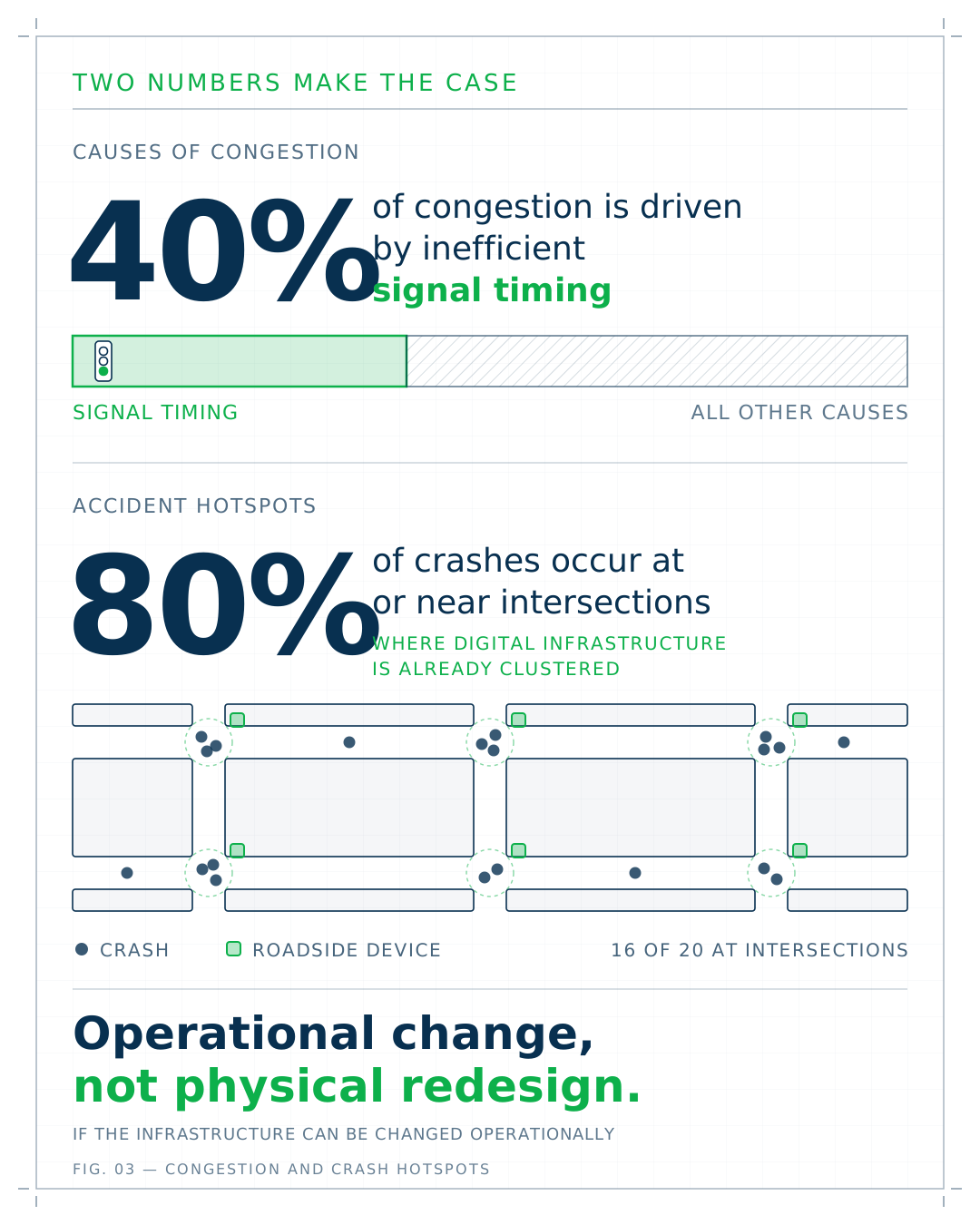
Two numbers make the case on their own: 40% of congestion is driven by inefficient signal timing, and 80% of crashes happen at or near intersections, the exact spots where digital infrastructure is already clustered. Put together, a lot of the safety and congestion problem is addressable through operational change, not physical redesign, if the infrastructure is set up to be changed operationally at all.
The hardware is there, but not managed that way
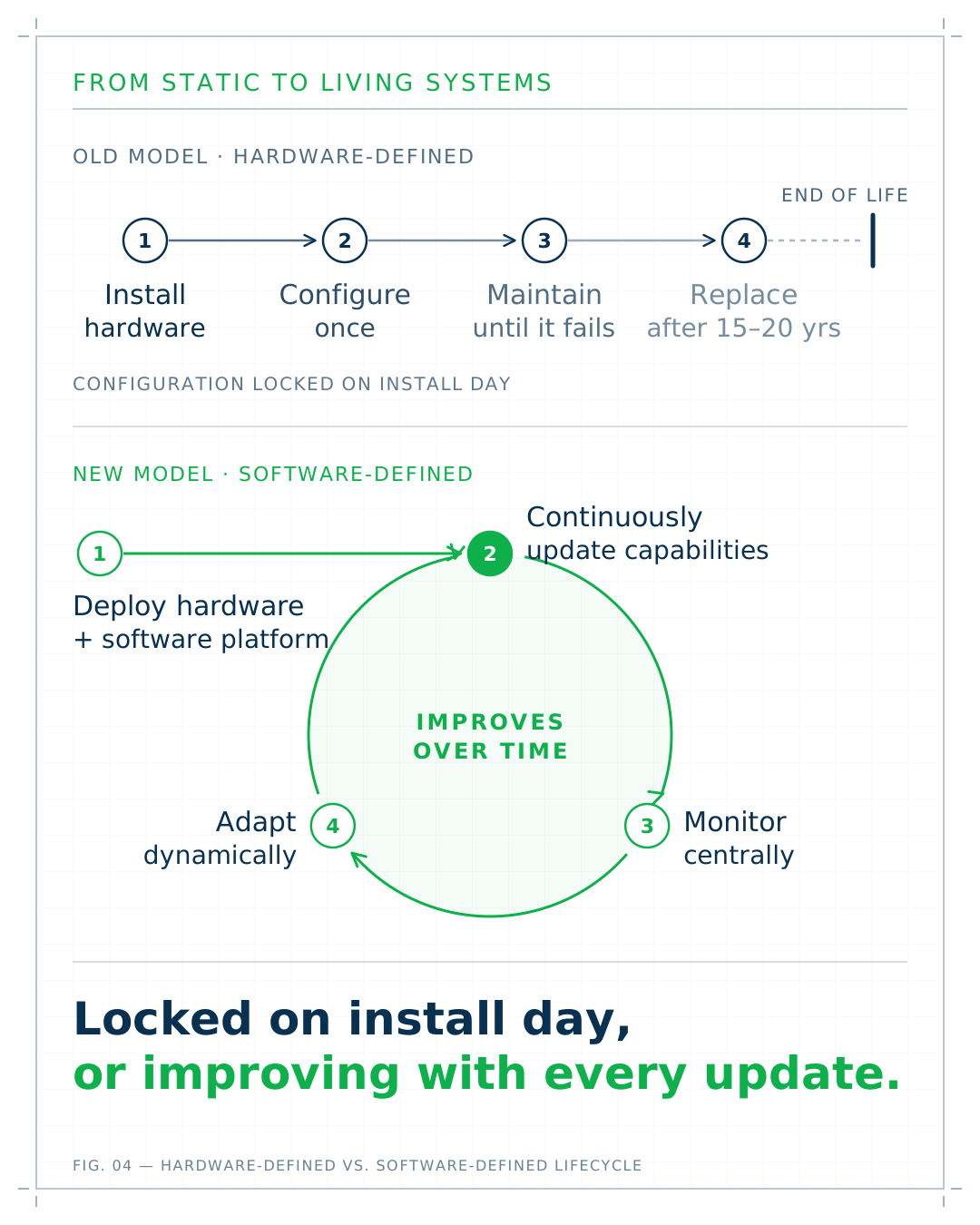
Roadside infrastructure has quietly gotten a lot more capable: connected roadside units, edge computing platforms, cameras, radars, and lidars are already persistently connected, software-capable systems in a lot of deployments. The gap isn't the hardware. It's that most of it is still run the old way: install it, configure it once, maintain it until it fails, replace it after 15–20 years.
A software-defined model looks different at every step. Deploy the hardware and a software platform, continuously update its capabilities, monitor performance centrally, and adapt its behavior dynamically as conditions change, instead of locking in a configuration on install day and living with it for two decades.
How software-defined infrastructure actually works
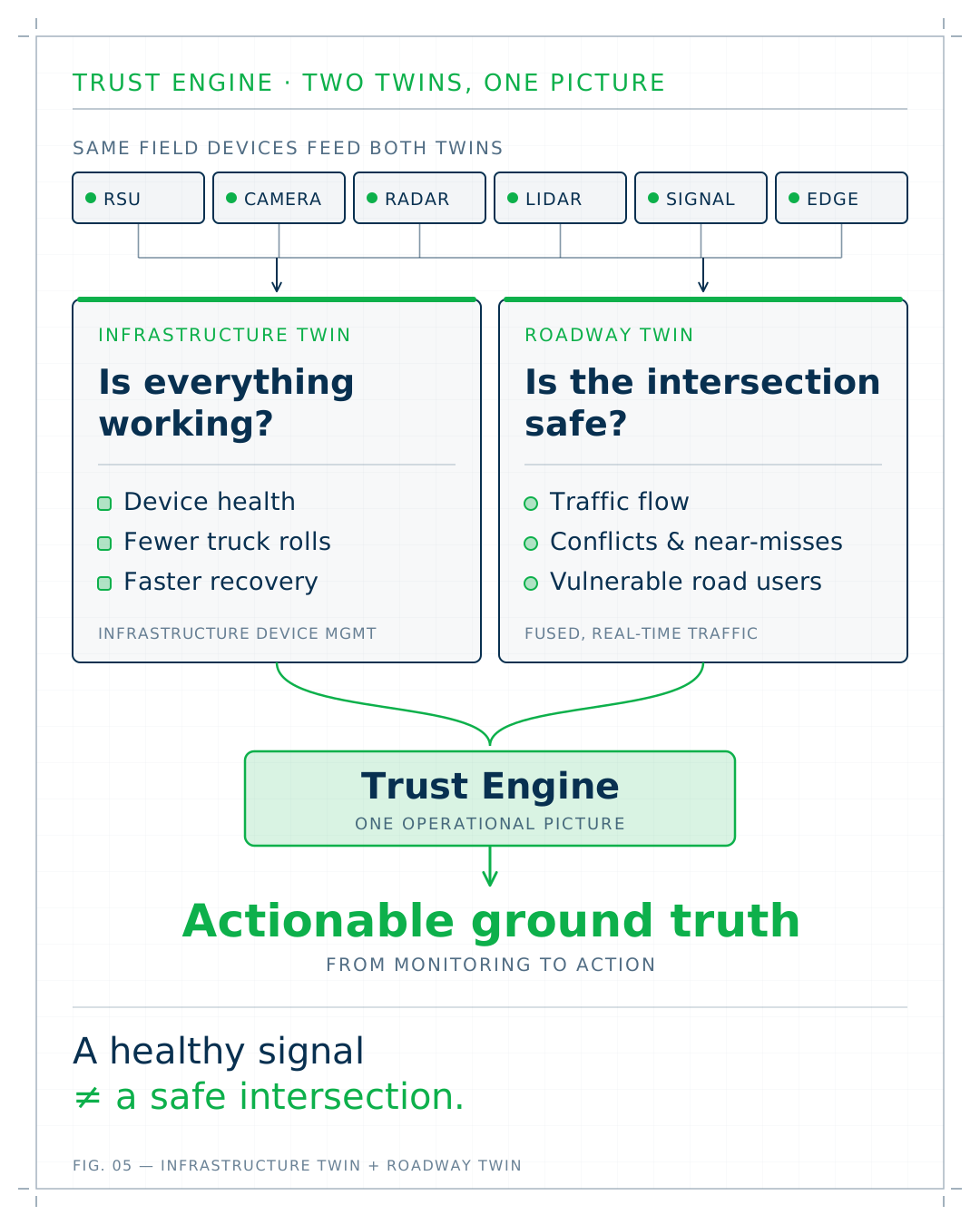
Our software-based approach is based on the Trust Engine, which uniquely combines an Infrastructure Twin and a Roadway Twin into a single operational picture. The Infrastructure Twin monitors deployed assets to answer one simple question: is everything working? This is our Infrastructure Device Management solution which connects roadside devices into one control layer, including RSUs from any vendor, cameras, radars, lidars, traffic signals, and edge computers. Agencies can monitor device health, instead of dispatching a truck to every cabinet, resulting in faster diagnosis and recovery when something goes wrong.
It doesn't answer the question that actually matters to a road safety program: is the intersection safe? A signal being healthy doesn't mean the intersection is safe. A camera being online doesn't mean the risk at that corner is understood.
Therefore Trust Engine unifies asset monitoring with traffic analysis — the Roadway Twin — to answer that second question. We provide a fused, real-time picture of traffic flow, conflicts, near-misses, and vulnerable road users, built from the same sensors the Infrastructure Twin is already managing.
Only by combining both twins enable agencies to move from monitoring to actionable ground truth.
The shift, in one sentence
Traditional infrastructure degrades over time. Software-defined infrastructure improves over time.

FAQ
What is software-defined roadway infrastructure? It's roadside infrastructure consists of RSUs, cameras, radars, lidars, edge computers, traffic signals, managed and updated centrally through software, instead of being installed once and left until it fails or gets replaced.
Does this mean replacing existing roadside hardware? No, the point is the opposite. Commsignia's Infrastructure Device Management is vendor-agnostic and connects to existing RSUs, cameras, radars, lidars, and traffic signals already in the field, regardless of vendor.
Why does response time matter for road safety? Because change on the street doesn't wait for a capital project: a new bike lane, a construction zone, a special event, or a new mobility mode can all shift risk overnight. A system that can only respond over years of hardware-replacement cycles is reacting to a problem that's already moved on.