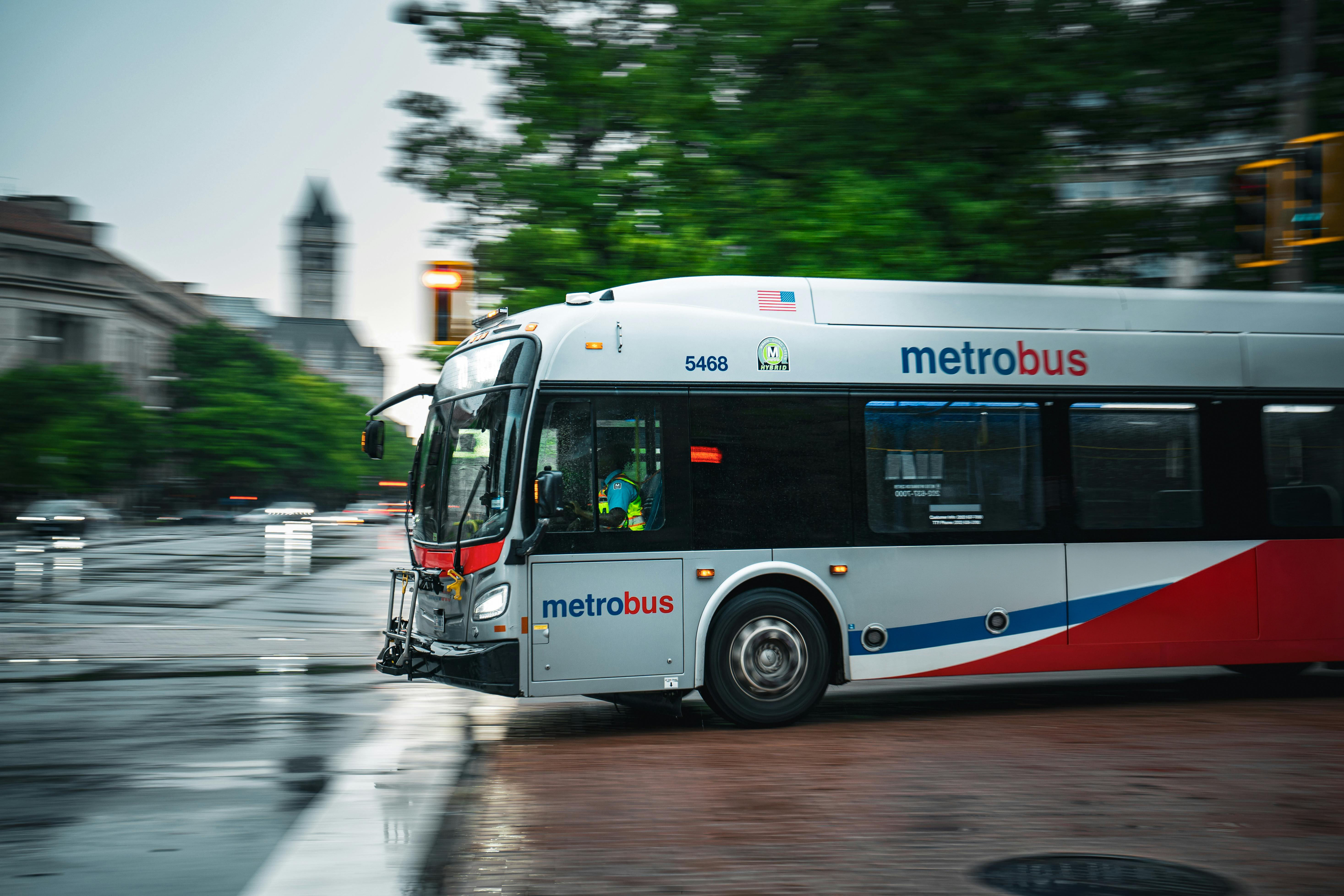
Calculating the ROI of Transit Signal Priority
Mar 30, 2026
Growing traffic congestion in urban and intercity corridors has become a challenge with widespread economic and logistical consequences. Significant delays impact daily commutes, and not just for drivers. Public transit systems face unreliable schedules, leading to passenger dissatisfaction and declining ridership, which reduces the return of investment in lanes and buses.
For commercial freight and logistics operations, the time lost in traffic translates directly into sharply increased operating costs. These elevated costs stem from several factors, including higher fuel consumption due to stop-and-go driving, faster wear and tear of vehicle components, and higher labor costs as drivers need to spend more hours on the road to complete the same routes. Losses are not limited to transport routes, the entire supply chain suffers from these inefficiencies.
There's a dangerous cycle: every traffic incident slows down traffic, and heavier traffic increases the risk of incidents. Vehicle-to-everything (V2X) technology helps to address both of these challenges at the same time. By extending green lights or truncating red lights for approaching connected vehicles, cities can keep high-value fleets moving, and the connected infrastructure can also provide safety warnings to avoid collisions.
What's the cost of a red light?
Now let's get down to the hard numbers that every community is interested in: how much can be gained by introducing V2X? to get accurate figures, we used a recent study from Oakland, MI (RosaP). According to the American Transportation Research Institute, the operating cost for trucking is $91.27 per hour. Field tests in Oakland demonstrate that TSP provides an average travel time reduction of 10 seconds per intersection pass.
This translates to a direct estimated cost savings of $0.25 every single time a commercial vehicle passes through a TSP-equipped intersection. Even a route with just 10 intersections can result in savings of over $1,300 per vehicle per year (passing through twice a day on 5 weekdays). We cannot directly add the cost of collisions to this, however enormous the amount may be: on average, up to $80,000 for buses and large trucks. The Oakland study calculates this way:
if V2X prevents 0.4% of crashes, the benefits exceeds the cost of the V2X deployment in 3 years.
Meanwhile, the impact of V2X can also be visible on the revenue side for the road operator. Connected vehicles generate rich data on wait times, trajectories and intersection performance, which can be monetized to fleet managers, insurance companies to cover operating costs.
V2X is traffic orchestration, not just signal hijacking
Let's see how V2X compares to the legacy optical priority systems.
Header 1 | V2X | Legacy optical |
|---|---|---|
Non-Line-of-Sight (NLOS) Capability | Uses omnidirectional radio waves. It can "see" around corners, through buildings, and through heavy weather. An ambulance can trigger a green light before it even turns onto the main corridor. | Requires a direct visual "beam" from the vehicle to the sensor on the traffic pole. If there is a curve in the road, heavy snow, or a large bus in the way, the signal fails. |
Vehicle-to-vehicle awareness | Simultaneously talks to the infrastructure and nearby vehicles. It sends an alert directly to the dashboards of connected cars, clearing the path before the siren is even heard. | Drivers in front of the emergency vehicle often don't know it's coming until they hear the siren. |
Multi-Intersection corridors | Because it is networked, V2X can look ahead and create a green corridor, a seamless wave to prevent the traffic bunching up between lights. | Typically works on a "point-and-shoot" basis at a single intersection. |
Orchestration | Supports relative priority, so that a fire truck is prioritized over a bus, and a late bus gets priority over an on-time bus. | It's binary: a vehicle get a green light, or it doesn't. |
Future proofing | Multi-purpose platform. Once V2X roadside units are installed, they can be expanded to include apps such as pedestrian safety, wrong-way driver detection, red light violation warning or automated tolling. | Single purpose hardware, only does priority/preemption. |
It’s clear that Vehicle-to-Everything (V2X) technology delivers substantial return on investment. It transforms traffic management from binary signal priority to intelligent traffic orchestration, drastically reducing congestion-related operational costs, and more importantly, V2X saves lives, with crash cost avoidance alone capable of offsetting the entire deployment budget within three years.
Commsignia’s BABA-compliant V2X equipment has been deployed in numerous projects, ranging from covering individual transit corridors to complex programs spanning multiple states. Contact us today to learn how V2X can create value for your specific corridors, transit fleet, or commercial logistics operations, and begin building your future-proof, app-based infrastructure.
Contact us
Contact us
Contact us